Gray May: A Month that Refuses to Look Away
Every May, the brain tumor community marks Brain Tumor Awareness Month (BTAM) by coming together under a shared color: gray. BTAM is an international campaign coordinated by organizations such as the International Brain Tumour Alliance (IBTA) and advocacy groups across Europe and beyond.
The objective is straightforward: keep brain tumors visible, because the disease itself often isn’t. Brain tumors kill across all age groups. They arrive without warning. In addition, survival rates have barely moved in decades, even as treatments for other tumor types have seen genuine progress.1
Unlike cancers that benefit from decades of public health messaging, brain tumors remain poorly understood by the public and inadequately funded relative to their severity.2 That alone is reason enough to pay attention for 31 days.
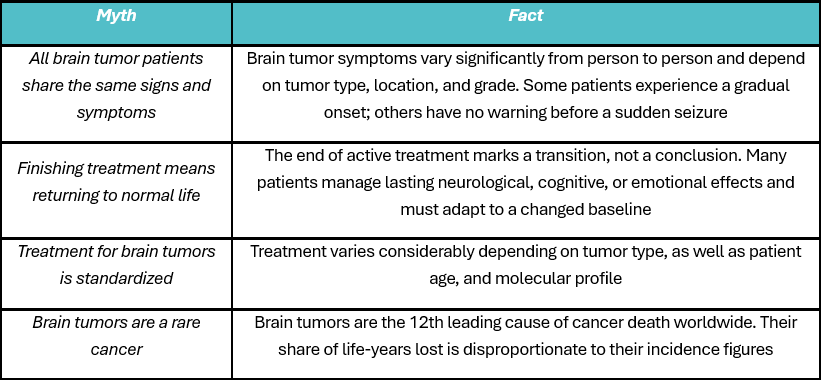
Myths vs Facts : Brain Cancer Edition
Many misconceptions persist regarding brain tumors. Let’s bust some common myths.3
Not One Disease: Understanding Brain Tumors
The brain controls movement, language, memory, emotions, personality, perception, and decision-making, while also regulating every involuntary function that keeps the body alive: from breathing and heart rate to sleep, temperature, and basic survival responses. When a tumor grows there, the consequences go well beyond what a tumor in most other organs would cause. A brain tumor occurs when cells in or around the brain begin dividing abnormally, forming a mass that can compress, infiltrate, or disrupt surrounding tissue.4
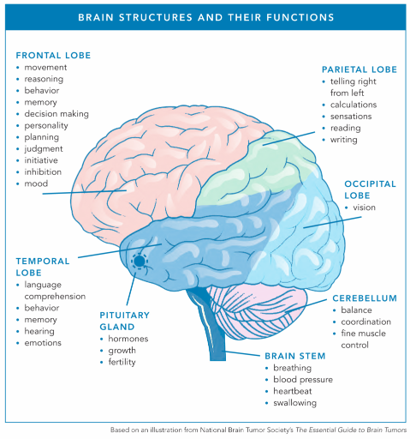
The human brain structures and their functions4
There are more than 100 distinct types of primary brain tumors, a fact that should dismantle any notion that “brain tumor” describes a single condition. Two patients with that diagnosis can face completely different treatments, timelines, and odds. There are two broad categories:5
- Primary brain tumors: originating directly in the brain or spinal cord in neurons, glial cells, the meninges (the membranes surrounding the brain and spinal cord), or other brain tissue.
- Secondary (metastatic) brain tumors: starting elsewhere in the body (lungs, breast, melanoma) and spreading to the brain. These are more common than primary tumors.
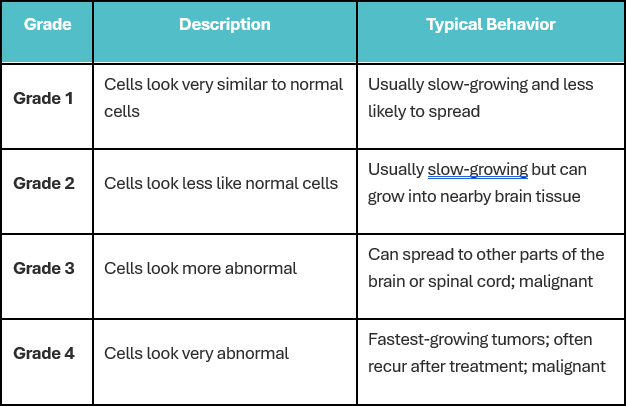
Primary brain tumors are classified by the WHO Classification of Tumors of the Central Nervous System. They are not staged like most cancers, instead, they receive a grade from 1 to 4 based on how aggressively the tumor is expected to behave. Grade 1 tumors are typically slow-growing and least aggressive; grade 4 tumors, like glioblastoma, are the most aggressive.5
However, some low grade tumours develop into malignant tumours. This is called malignant transformation or disease progression.6
The Numbers Behind the Disease
Brain and CNS tumors account roughly 1.9% of all cancer diagnoses worldwide, but their share of mortality and life-years lost is disproportionate to that number.
According to GLOBOCAN 2022 estimates, there were approximately 321,000 new cases and 251,000 deaths from brain and CNS cancer globally in that year, placing it as the 12th leading cause of cancer death worldwide.7
A 2023 study drawing on Global Burden of Disease data from 204 countries found that brain cancer incidence has risen across most world regions over the past three decades, partly explained by improved diagnostics and aging populations, but also reflecting a genuine increase in burden.8
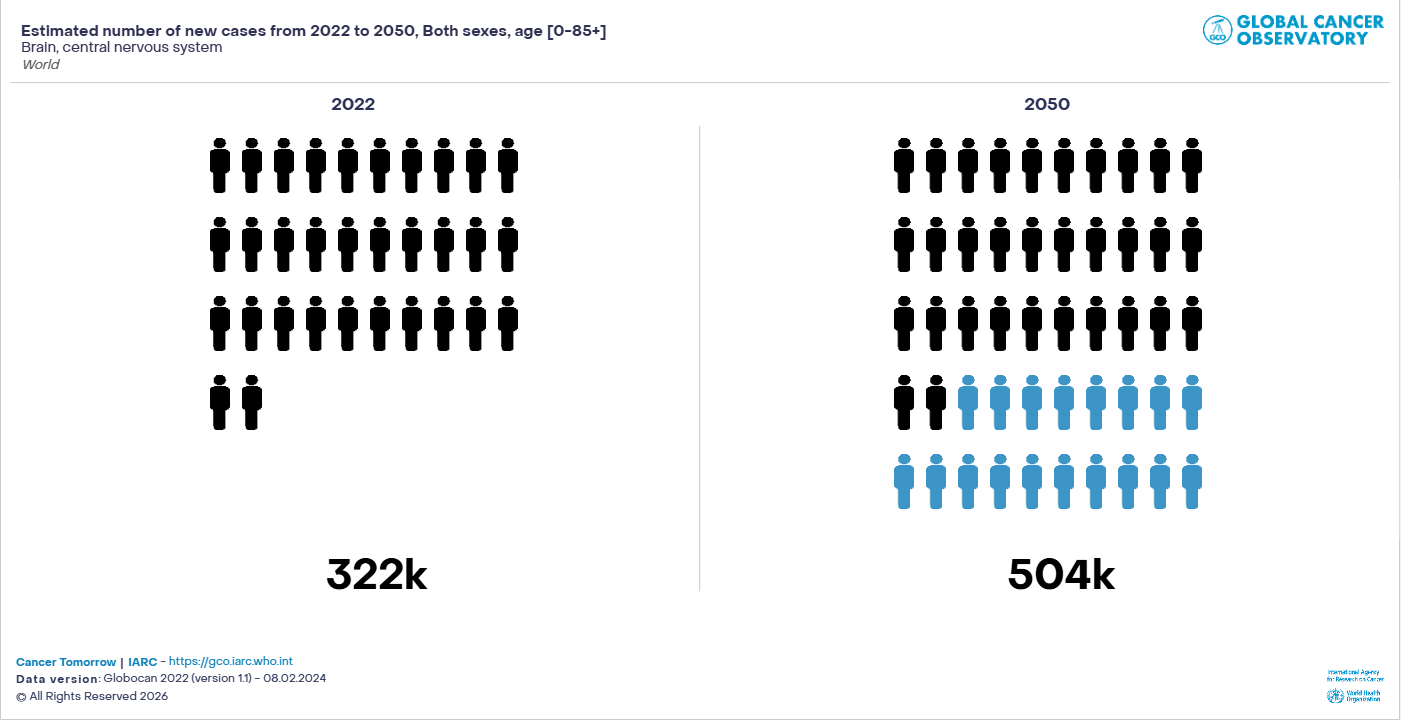
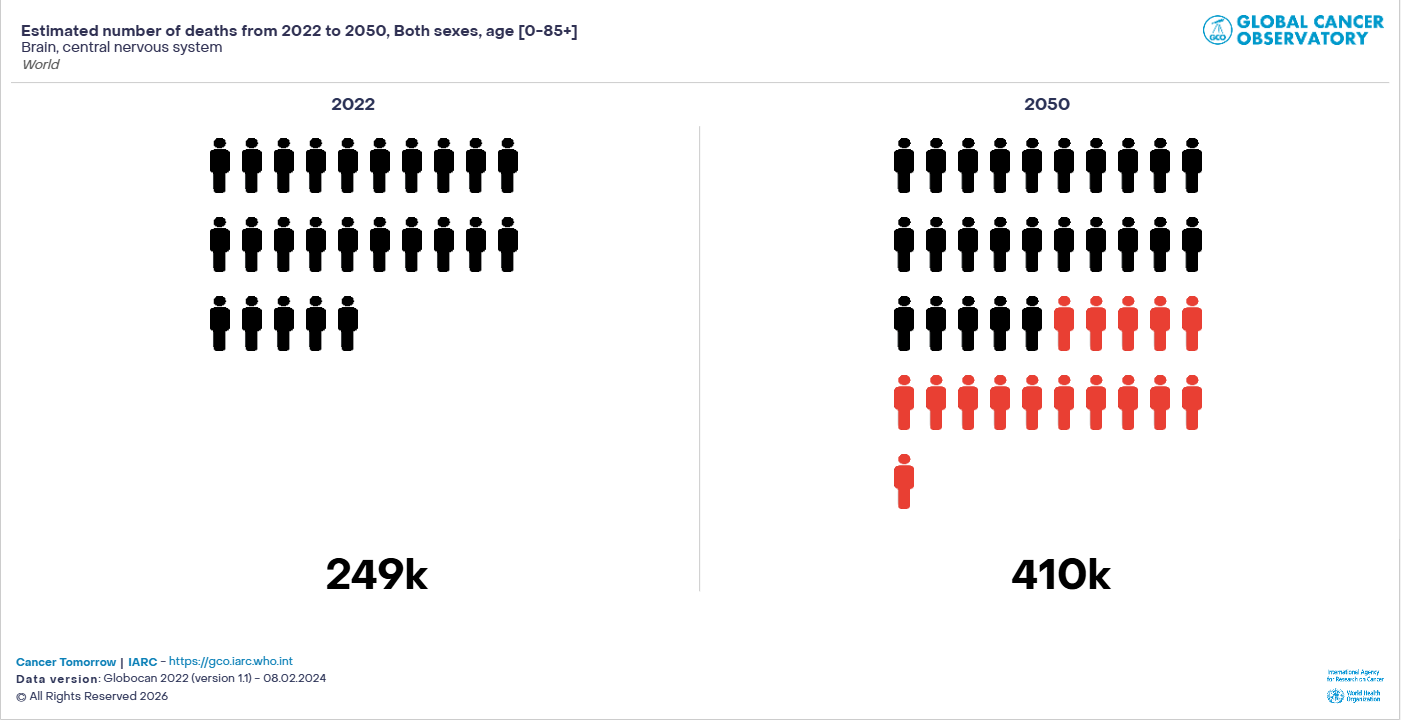
Estimated number of new cases and deaths caused by brain cancer from 2022 to 20509
Among children under 14, brain tumors are the most common cause of cancer death. Among adolescents and young adults aged 15-39, they are the second leading cause.9
Why Brain Tumors are so Hard to Treat
Treating brain tumors is harder than treating most other cancers, not just because of the biology, but because of geography. The brain sits inside a rigid skull, surrounded by a blood-brain barrier that blocks many systemic therapies from reaching tumor cells at therapeutic concentrations. Surgery near eloquent cortex, the areas governing language, movement, and personality, carries the risk of permanent neurological deficits. And brain tumors are graded, not staged, meaning treatment decisions require a different framework from most solid tumors.10
Current standard treatment for high-grade gliomas combines:
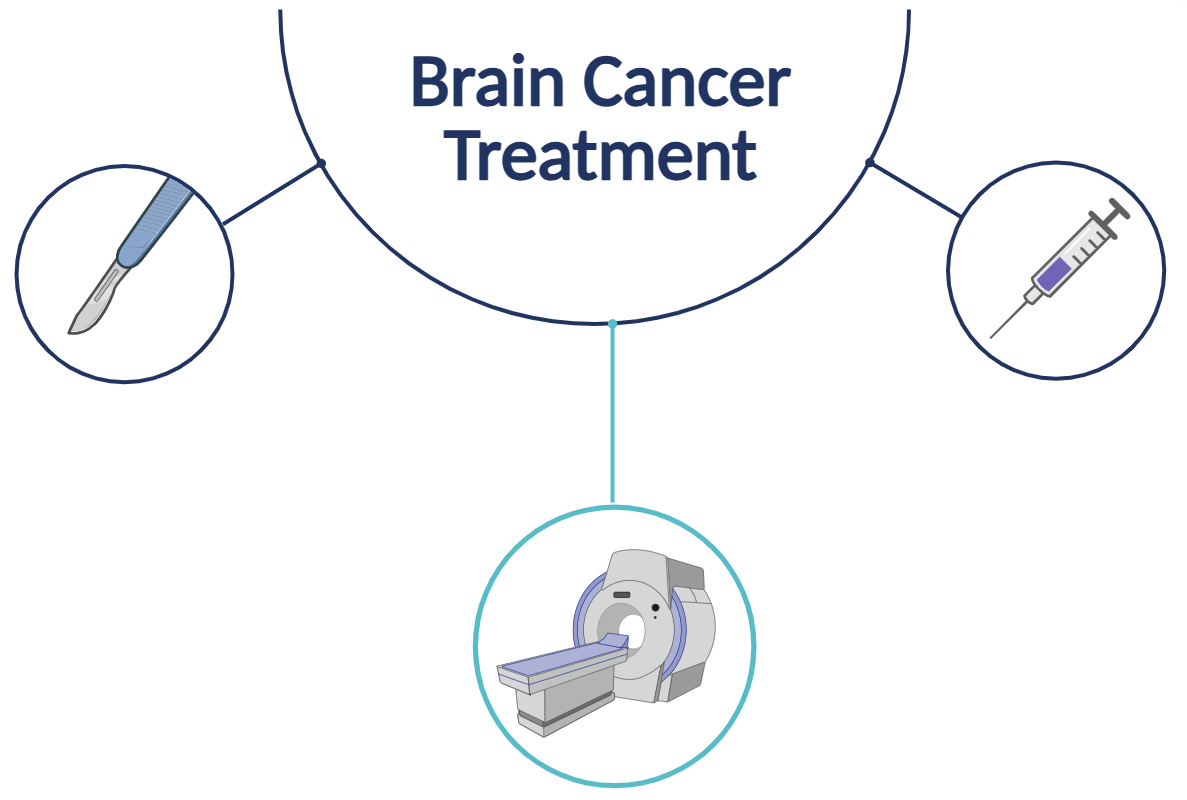
- Surgery: maximum safe resection, aiming to remove as much tumor tissue as possible without causing neurological damage.
- Radiotherapy: typically delivered in fractionated sessions over several weeks, targeting residual tumor cells. It remains a cornerstone of treatment for both primary and metastatic brain tumors.
- Chemotherapy: most commonly temozolomide for glioblastoma, sometimes combined with other agents depending on molecular tumor characteristics.
Despite these options, glioblastoma survival has barely moved in twenty years. The Stupp protocol, surgery plus temozolomide plus radiotherapy, became standard of care in 2005, and remains largely so today.6 The tumor is genetically unstable, recurrence is almost inevitable, and recurrent GBM tends to be more resistant to retreatment than the original tumor.11;12
Where Research is Heading
The research pipeline is active: between November 2024 and June 2025 alone, dozens of new clinical trials opened, covering CAR T-cell therapies, immunotherapy combinations, targeted molecular agents, and new radiation delivery approaches.13
On the radiotherapy side, an emerging area of research focuses on delivering radiation at ultra-high dose rates, an approach known as FLASH radiotherapy, which is still under preclinical and early translational investigation prior to large-scale clinical trials.14 Preclinical data, including studies of whole-brain irradiation in animal models, suggests that at dose rates above 100 Gy/second, radiation may spare healthy brain tissue more effectively than conventional delivery while maintaining comparable tumor kill. For brain tumors specifically, this property matters: cognitive side effects of whole-brain irradiation are a serious limitation of current practice, particularly in long-term survivors.15
In preclinical studies, mice irradiated using FLASH delivery retained memory and object-recognition capacities that were significantly impaired in conventionally irradiated animals.15;16 More recent studies have demonstrated durable preservation of memory and synaptic plasticity several months after treatment. The proposed mechanisms include reduced oxidative stress, lower neuroinflammation, and better preservation of hippocampal structures, a region critical to memory formation.16
The biological mechanisms behind the FLASH effect are still under active investigation. Translating this approach to clinical practice for deep-seated brain tumors requires substantial technical advances. Multiple research groups worldwide, including the international proton FLASH Delphi consensus process published in 2024, are working to define what clinical trials in this space should look like.17
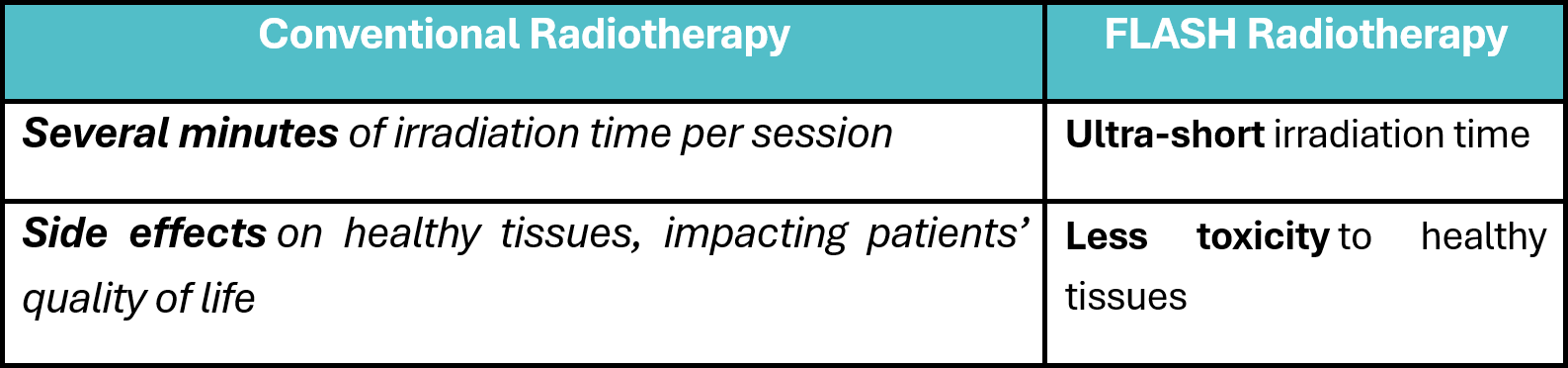
Comparison between conventional and FLASH radiotherapy16;18
One technical path to reaching deep-seated brain tumors involves very high-energy electron (VHEE) beams, which offer the penetration depth required to treat tumors located well inside the brain while sustaining the dose rates associated with the FLASH effect.19;20
Conclusion
Brain tumors remain among the most complex and difficult cancers to treat, with survival for aggressive forms largely unchanged for decades. There is still no early detection test, symptoms are non-specific, and outcomes remain poor despite incremental therapeutic advances.
However, the field is entering a period of scientific acceleration. New approaches in molecular oncology, immunotherapy, and innovative radiation strategies are reshaping research directions; particularly FLASH radiotherapy, an ultra-high dose rate technique still in early-stage investigation that could fundamentally change how normal tissue is spared during treatment.
Brain Tumor Awareness Month does not directly improve outcomes, but it helps sustain the visibility, funding, and research momentum needed for breakthroughs to emerge. As in other cancers before it, meaningful progress will likely come from the convergence of sustained attention and disruptive scientific innovation.
In the meantime, supporting rigorous research and accurate information remains a key part of enabling the next wave of advances.
Sources:
1- Mayo Clinic News Network. (n.d.). Study: More aggressive treatments needed to improve 5-year survival rate for glioblastoma. Mayo Clinic. https://newsnetwork.mayoclinic.org/discussion/study-more-aggressive-treatments-needed-to-improve-5-year-survival-rate-for-glioblastoma/
2- National Brain Tumor Society. (n.d.). Brain tumor facts. https://braintumor.org/brain-tumors/about-brain-tumors/brain-tumor-facts/
3- Brain Tumour Foundation of Canada. (n.d.). Myths about brain tumours. https://www.braintumour.ca/facing-a-brain-tumour/myths-about-brain-tumours/
4- National Brain Tumor Society. (n.d.). Signs & symptoms. https://braintumor.org/brain-tumors/diagnosis-treatment/signs-symptoms/
5- Louis, D. N., Perry, A., Wesseling, P., Brat, D. J., Cree, I. A., Figarella-Branger, D., Hawkins, C., Ng, H. K., Pfister, S. M., Reifenberger, G., Soffietti, R., von Deimling, A., & Ellison, D. W. (2021). The 2021 WHO classification of tumors of the central nervous system: A summary. Neuro-Oncology, 23(8), 1231–1251. https://pmc.ncbi.nlm.nih.gov/articles/PMC8328013/
6- Cancer Research UK. (n.d.). Grades of brain and spinal cord tumours. https://www.cancerresearchuk.org/about-cancer/brain-tumours/grades
7- Ferlay, J., Ervik, M., Lam, F., Laversanne, M., Colombet, M., Mery, L., Piñeros, M., Znaor, A., Soerjomataram, I., & Bray, F. (2024). Global cancer statistics 2022: GLOBOCAN estimates of incidence and mortality worldwide for 36 cancers in 185 countries. CA: A Cancer Journal for Clinicians. https://gco.iarc.who.int
8- Ilic, I., & Ilic, M. (2023). International patterns and trends in the brain cancer incidence and mortality: An observational study based on the global burden of disease. Heliyon, 9(7), e18222. https://doi.org/10.1016/j.heliyon.2023.e18222
9- International Agency for Research on Cancer. (n.d.). Cancer tomorrow [Data visualization]. IARC. https://gco.iarc.who.int/tomorrow/en/dataviz/isotype?years=2050&cancers=31&single_unit=10000&sexes=0&types=0
10- Arvanitis, C. D., Ferraro, G. B., & Jain, R. K. (2020). The blood–brain barrier and blood–tumour barrier in brain tumours and metastases. Nature Reviews Cancer, 20, 26–41. https://doi.org/10.1038/s41568-019-0205-x
11- Medscape. (n.d.). Glioblastoma guidelines: Guidelines summary. https://emedicine.medscape.com/article/283252-guidelines
12- Stupp, R., Mason, W. P., van den Bent, M. J., Weller, M., Fisher, B., Taphoorn, M. J. B., Belanger, K., Brandes, A. A., Marosi, C., Bogdahn, U., Curschmann, J., Janzer, R. C., Ludwin, S. K., Gorlia, T., Allgeier, A., Lacombe, D., Cairncross, J. G., Eisenhauer, E., & Mirimanoff, R. O. (2005). Radiotherapy plus concomitant and adjuvant temozolomide for glioblastoma. New England Journal of Medicine, 352(10), 987–996. https://doi.org/10.1056/NEJMoa043330
13- National Brain Tumor Society. (n.d.). New brain tumor clinical trials: November 2024–June 2025. https://braintumor.org/news/new-brain-tumor-clinical-trials-november-2024-june-2025
14- Wang, Z., Li, C., Zhao, Z., Liu, X., Yang, R., & Zhang, L. (2025). Clinical translation of ultra-high dose rate FLASH radiotherapy: Opportunities, challenges, and prospects. World Journal of Radiology, 17(4), 105722. https://doi.org/10.4329/wjr.v17.i4.105722
15- Montay-Gruel, P., Petersson, K., Jaccard, M., Boivin, G., Germond, J.-F., Petit, B., Doenlen, R., Favaudon, V., Bochud, F., Bailat, C., Bourhis, J., & Vozenin, M.-C. (2017). Irradiation in a flash: Unique sparing of memory in mice after whole-brain irradiation with dose rates above 100 Gy/s. Radiotherapy and Oncology, 124(3), 365–369. https://doi.org/10.1016/j.radonc.2017.05.003
16- Favaudon, V., Caplier, L., Monceau, V., Pouzoulet, F., Sayarath, M., Fouillade, C., Poupon, M.-F., Brito, I., Hupé, P., Bourhis, J., Hall, J., Fontaine, J.-J., & Vozenin, M.-C. (2014). Ultrahigh dose-rate FLASH irradiation increases the differential response between normal and tumor tissue in mice. Science Translational Medicine, 6(245), 245ra93. https://doi.org/10.1126/scitranslmed.3008973
17- Klaver, Y. L. B., Hoogeman, M. S., Lu, Q. R., Bradley, J. D., Choi, J. I., Ferris, M. J., Grau, C., Guha, C., Lin, H., Lin, L., Mascia, A. E., Moerman, A. M., Poulsen, P. R., Shi, L. Z., Singers Sørensen, B., Tian, S., Vozenin, M.-C., Willey, C. D., Zhou, S., … Simone, C. B. (2025). Requirements and study design for the next proton FLASH clinical trials: An international multidisciplinary Delphi consensus. International Journal of Radiation Oncology, Biology, Physics, 123(1), 296–305. https://doi.org/10.1016/j.ijrobp.2025.03.047
18- Crompton, S. (2023, November 3). Ultra-high dose rate radiation: Is FLASH the future? Cancerworld Magazine. https://cancerworld.net/ultra-high-dose-rate-radiation-is-flash-the-future/
19- Panaino, C. M. V., Labate, L., Piccinini, S., Borghini, A., Andreassi, M. G., & Gizzi, L. A. (2025). Very high-energy electron therapy toward clinical implementation: A literature review. Cancers, 17(2), 181. https://doi.org/10.3390/cancers17020181
20- Schüler, E., Acharya, M., Montay-Gruel, P., Loo, B. W., Jr., Vozenin, M.-C., & Maxim, P. G. (2022). Ultra-high dose rate electron beams and the FLASH effect: Evaluation of ULAR beam characteristics and biological effects. Medical Physics, 49(3), 2082–2095. https://doi.org/10.1002/mp.15554